Our first activities in Vietnam took place in 1955, when we provided humanitarian assistance, and since the late 1980s we have been implementing long-term development projects across the country. Although Vietnam achieved lower middle-income status in 2010, rising inequality threatens decades of progress. Disadvantaged groups, such as women, ethnic minorities and the rural poor lack access to resources and economic opportunities. A lack of investment in education, healthcare and social engagement for these groups further undermines their prospects for a better future.
Ending inequality is fundamental to what we do. We believe that equality is essential for a just society – a society in which everyone, regardless of gender, has equal access to resources and opportunities, and is treated with dignity and respect. We work with our partners in government, social organizations, businesses, the media, and academia to influence policy and change the systems that sustain inequality. To ensure lasting change, we work to change the narrative that says inequality is acceptable and inevitable.

We are committed to building a people-centred development model that is feminist and values what truly matters to society.
Oxfam in Vietnam contributes to a shift from the current growth-based development model to a Human Economy that cares for people and the planet. The broad goals are realized through three specific goals:
Goal 1: Gender Equality and Women’s Agency
Goal 2: Social Accountability and Empowered Citizens
Goal 3: Secured Livelihoods and Resilient Communities

We aim to embrace diversity and ensure women’s full and effective participation and equal opportunities for leadership at all levels of decision-making in political, economic and public life.
We aim for inclusive growth and women achieving equal rights to economic resources, financial services, natural resources, in accordance with national laws.
- Vulnerable women have enhanced equity in access to and benefits from economic opportunities, services, and resources.
- Changes in gender norms are achieved that value and recognize the contribution of both men and women.
- The legal framework and its enforcement for gender equality are enhanced.
- More women take leadership roles in the economy, politics, and society through sustainable changes that support the advancement of women in all spheres of life and in both private and public spaces to address inequalities and enlist the support of both women and men.
Our projects
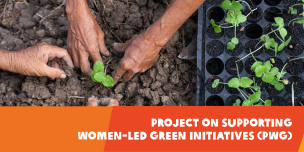
- Project on Supporting Women-led Green Initiatives (PWG) (2024 - 2029)
- Youth Address Gender Stereotypes and Promote Gender Equality in Vietnam (2020 - 2024)
- Support for Women Suffering Gender-Based Violence (GBV) during Covid-19 (2020 - 2022)
- Review of the Gender Equality Law (2021)
- Enhancing Female Participation in Project Choice Through Self-Help Groups in Vietnam (June-December 2021)
- Indigenous Pig - Gender Responsive Equitable Agriculture and Tourism (GREAT) (2019 - 2021)
- Women’s Economic Empowerment through Agriculture Value Chain Enhancement (WEAVE) (2016 - 2019)
Goal 2: Social Accountability and Empowered Citizens

We aim for empowered citizens to work towards accountable, inclusive, transparent and effective governance, including economic governance. This involves responsive, inclusive, participatory and representative decision-making.
- People (especially vulnerable groups such as women, poor people, ethnic minorities, people with. disabilities…) have agency to discuss decisions that affect their lives.
- Universal social protection becomes the norm.
- State and private financing for development is more transparent, inclusive, sustainable and equitable.
- Governments and the private sector are accountable.
Our projects
- Fair Finance Vietnam (2018-2022)
- Strengthening Access of Ethnic Minorities in the Use and Management of Land and Forest (2020-2023)
- Justice Initiatives Facilitation Fund of the EU Justice and Legal Empowerment Programme in Vietnam (2017-2022)
- Decent Work and Social Protection (2017-2022)
Goal 3: Secured Livelihoods and Resilient Communities

Our aim is that smallholders and vulnerable people have equal rights and access to economic and productive resources for secure livelihoods and have enhanced resilient capacity in relation to climate change and disaster risks.
We focus on:
- Secure and improved income and fair share of benefits for small-scale producers and the private sector and vulnerable groups including ethnic minorities, poor people, disaster prone communities, etc.
- Access to and sustainable use of production resources such as land, water, finance/credit and innovation/environmentally friendly technology
- Vulnerable communities and the private sector have enhanced resilience to climate change through improved capacity on climate change adaptation and mitigation, and disaster risk reduction.
- Women’s leadership in agribusiness
- Government and private sectors at all levels are accountable for inclusive, sustainable, development policies for small-scale producers and vulnerable groups to benefit from sustainable production.
Our Projects
- Improved social protection and decent work for women farmers and informal labourers in shrimp and rice value chains in Vietnam (DGD) (2022 - 2026)
- Strengthening Disaster Risk Management and Climate Change Adaptation Capacity in the Mekong Region (SCR) (2023–2025)
- Biomass Gasification Technology - Sustainable Energy Solution for Agri-Food Processing and Waste Management in Rural Areas of Vietnam (BEST) (2020 - 2024)
- Inclusion Project - Phase 2 (IP2): Mekong Regional Water Governance Programme (MRWGP) (2020 - 2024)
- Enhancing the Export Competitiveness of Vietnamese Small and Medium Enterprises in Spice, Fruit and Vegetable Sub-Sectors (SFV-Export) (2022 - 2023)
- Gender Transformative & Responsible Business Investment in South East Asia (GRAISEA) Phase 2 (2018 - 2023)
- Inclusive and Sustainable Clam and Bamboo Value Chain Development in Vietnam (SCBV) project (2018 - 2022)
- People Protecting their Ecosystem in the Lower Mekong III (PEM III) (2019 - 2021)