From indigenous knowledge to an inclusive future

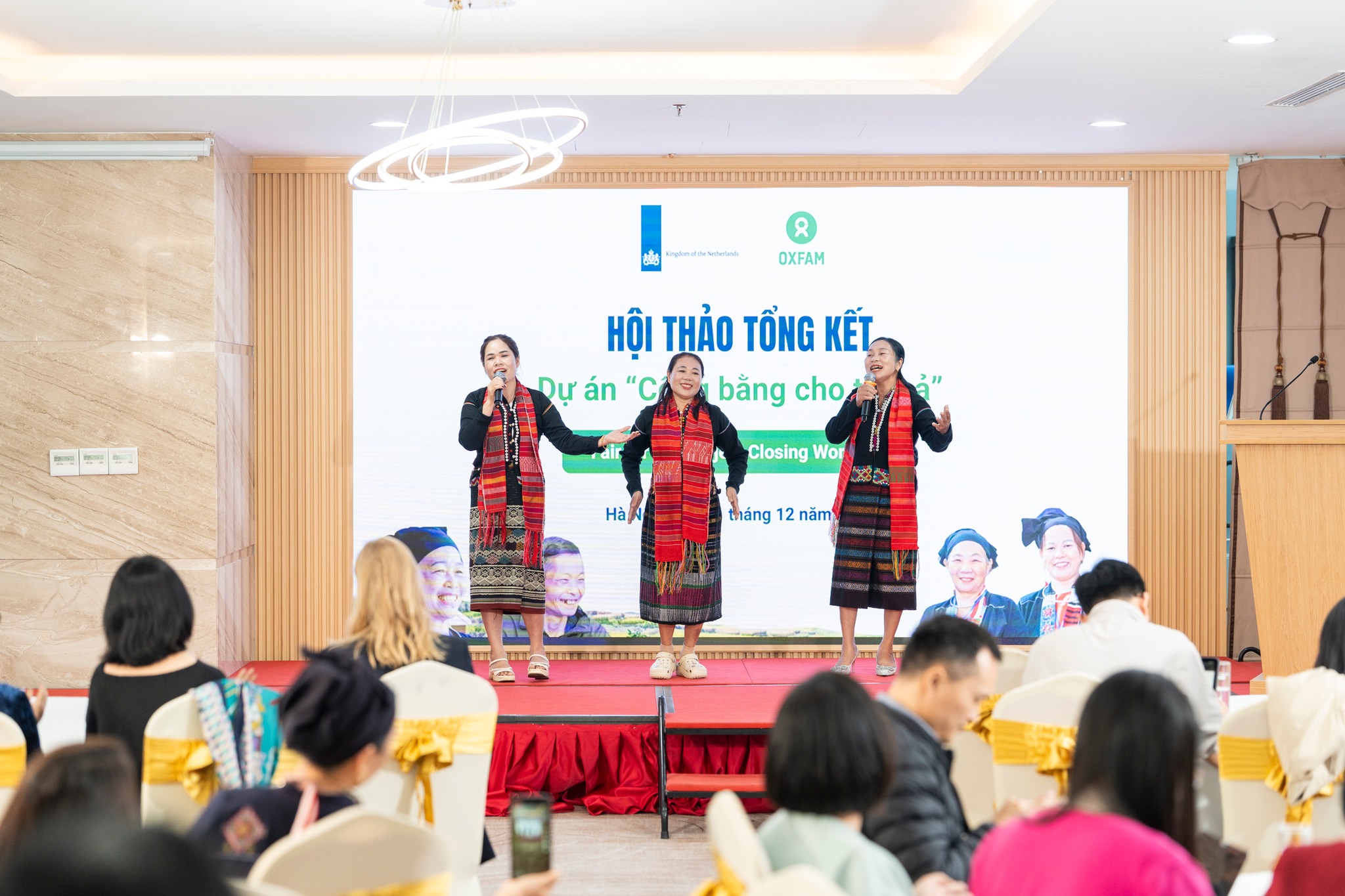
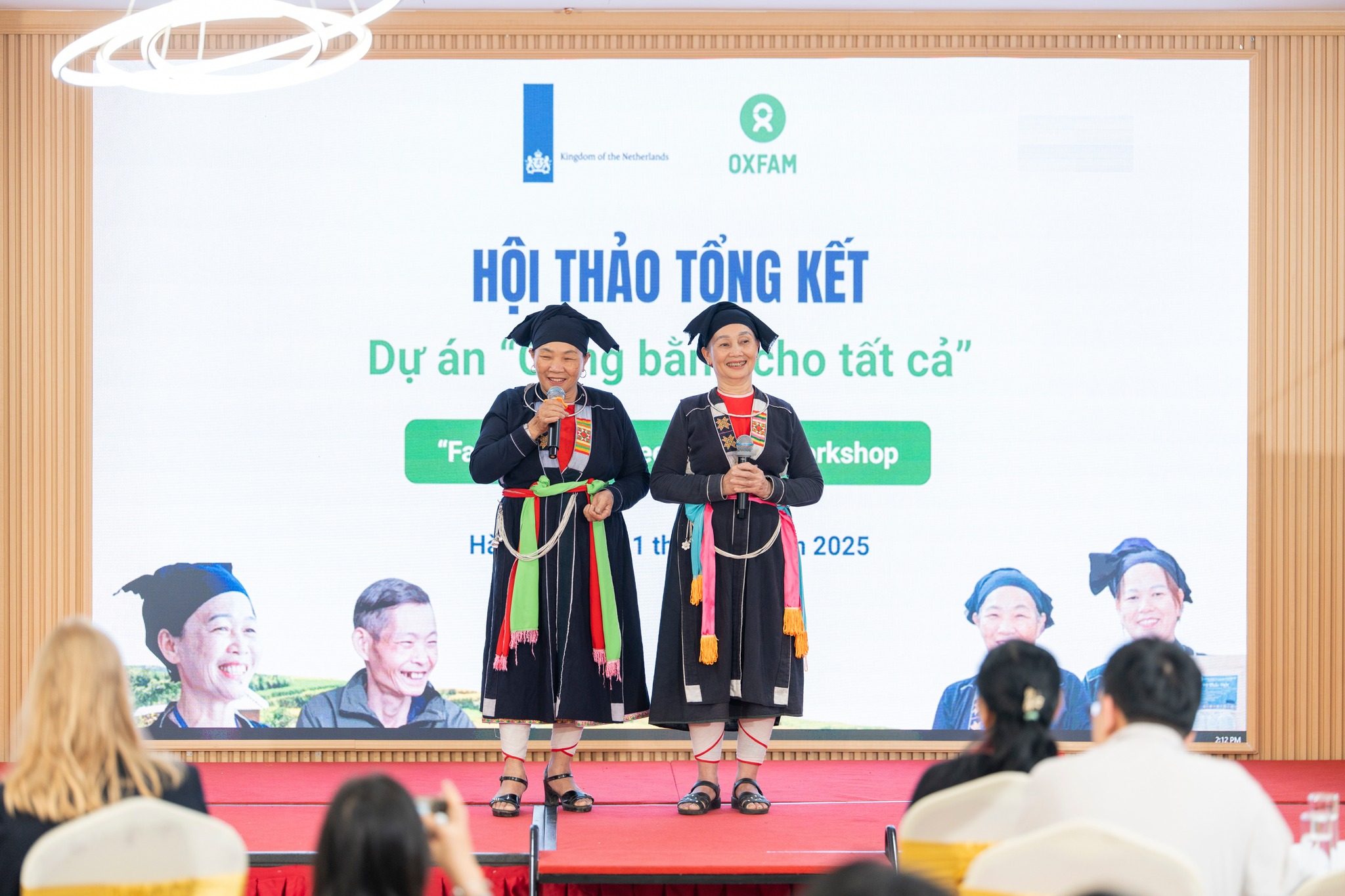
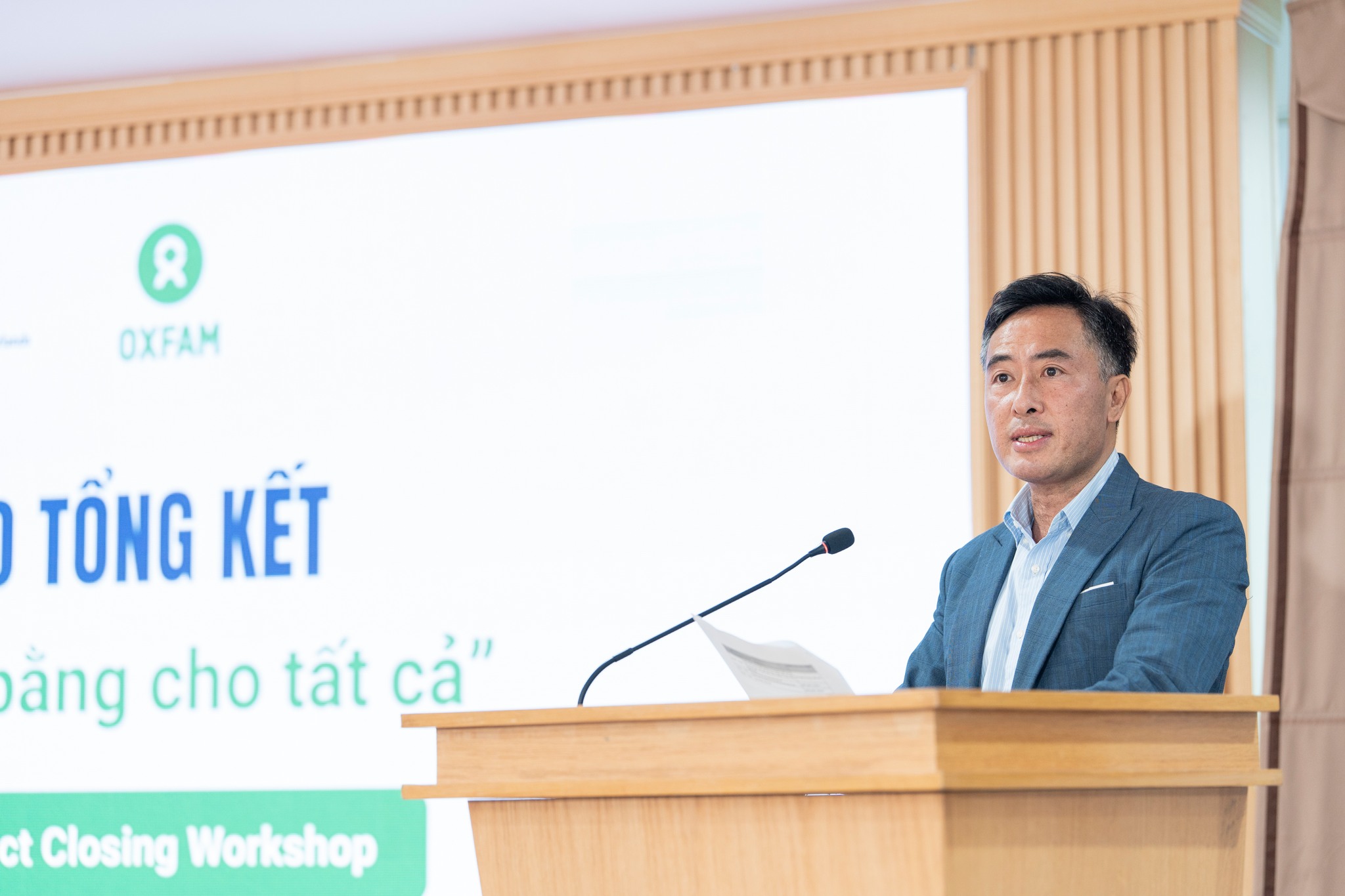
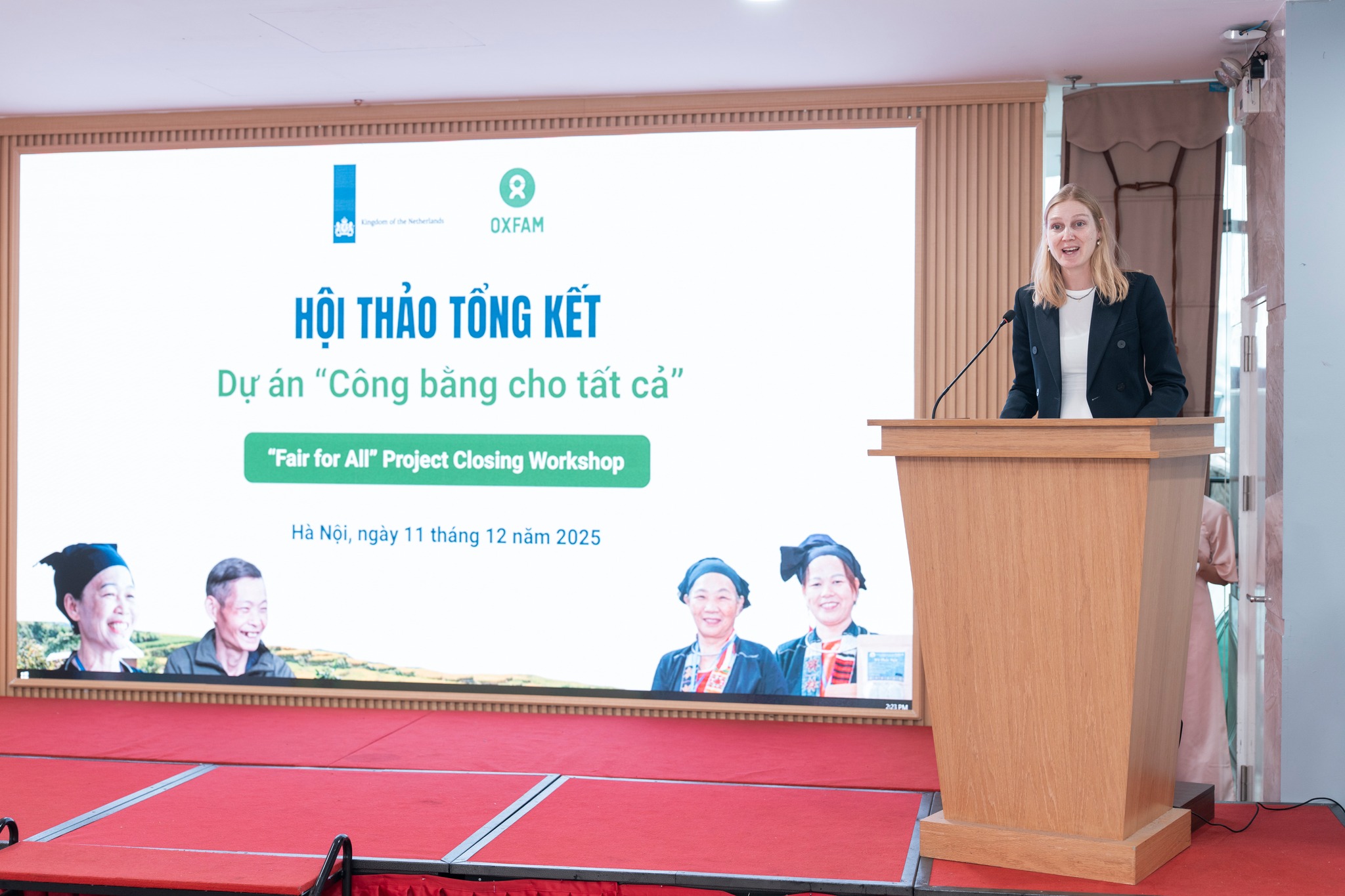
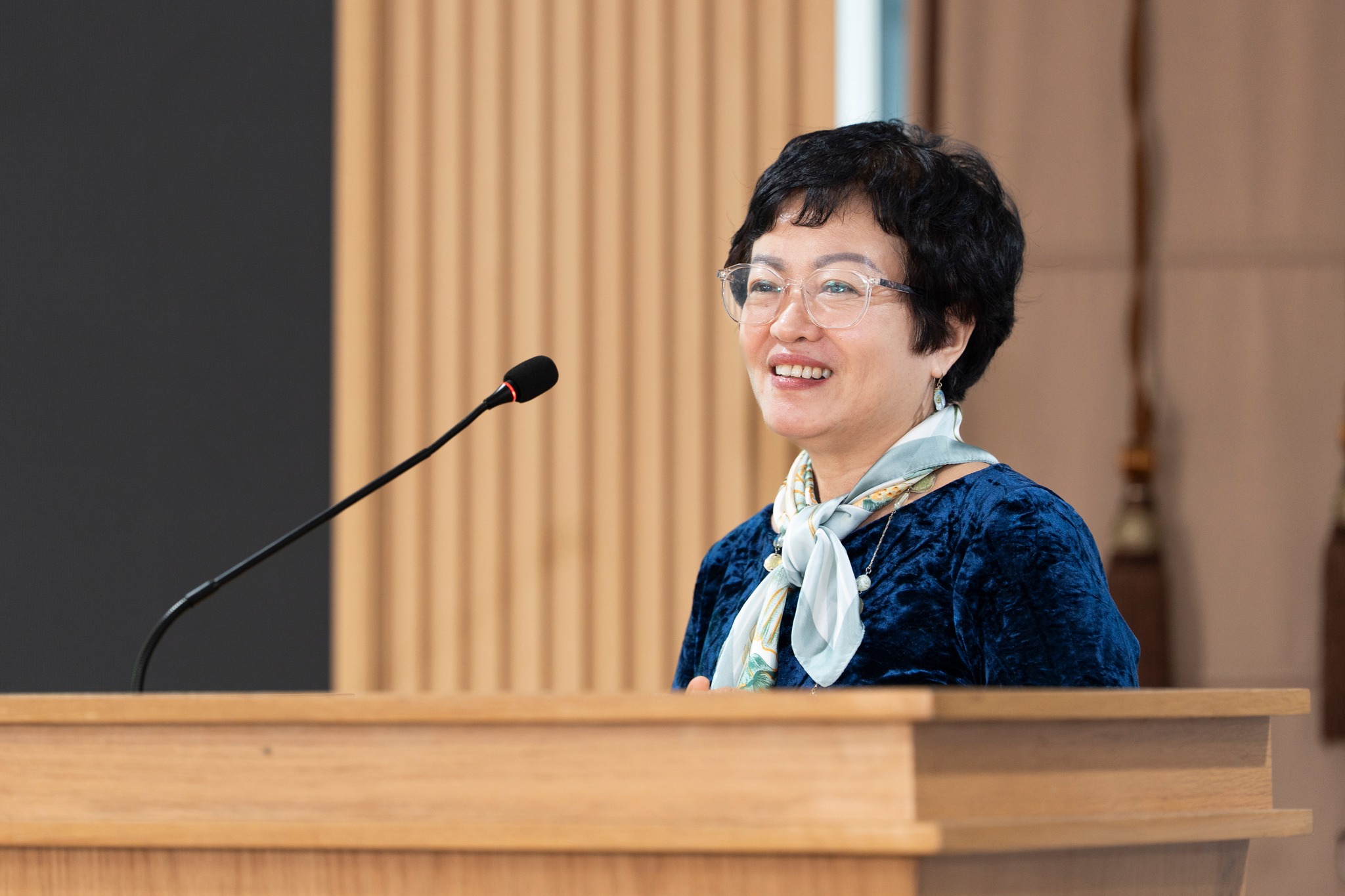
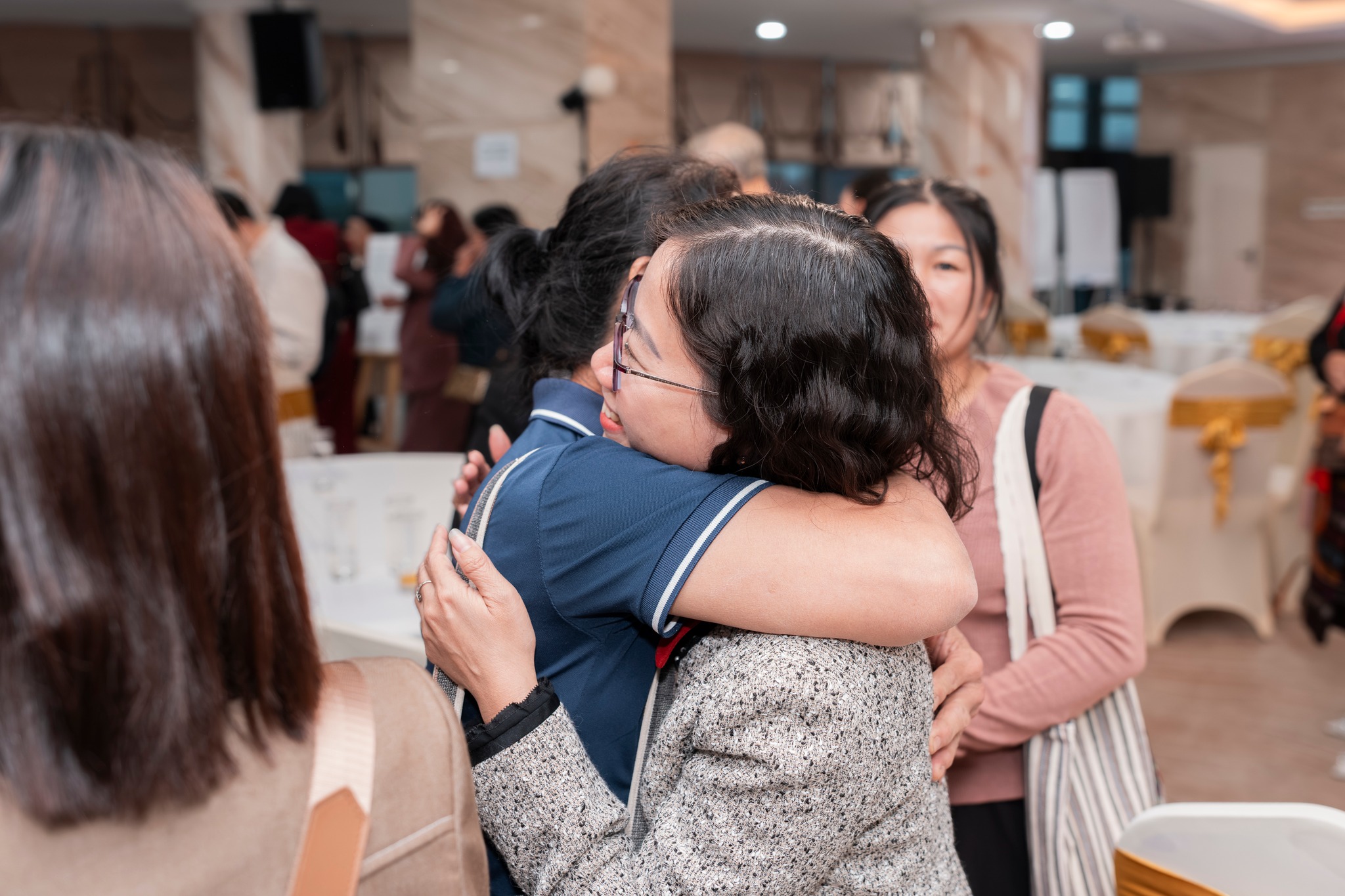
On December 11, the closing workshop of the “Fair for All” (F4A) Project was held in Hanoi, with the participation of community members from three of the project provinces—Lao Cai, Thai Nguyen, and Quang Tri—along with representatives of partner organizations, mass organizations, universities, research institutes, and the media.
The workshop marked the conclusion of a five-year journey in which Oxfam accompanied multiple stakeholders toward a shared goal: enabling vulnerable communities to actively participate in promoting more sustainable and inclusive trade and value chains, placing people and the planet at the center, protecting the environment, and strengthening women’s agency.

In terms of its approach, the F4A Project places indigenous knowledge as the foundation for the participation of local people, communities, and authorities in designing and implementing green livelihood and circular economy models at the local level, while simultaneously strengthening the capacity of social organizations working alongside these communities.
At the workshop, two thematic panel discussions were also organized, creating open spaces for dialogue to share results, practical experiences, and approaches to green and sustainable agricultural and rural development.
The first panel discussion, titled “Sharing Results and Experiences in Implementing Agricultural Value Chain Activities for Green and Sustainable Development”
The first panel discussion, titled “Sharing Results and Experiences in Implementing Agricultural Value Chain Activities for Green and Sustainable Development,” was moderated by Nguyen Thi Bich Tam (Center for Community Capacity Enhancement – CECEM), with the participation of community representatives and cooperatives from Thai Nguyen, Lao Cai, and Quang Tri.
While many community-based livelihood and business development models already exist, the key question is how to ensure that these activities are autonomous, sustainable, rooted in indigenous knowledge, and created and led by local people themselves. This is what makes the project distinctive. Hau Thi Cuong from Dong Tien Agricultural and Community Tourism Cooperative (Thai Nguyen) shared: “I have never participated in a project that was so patient with local people, listened to us so deeply, and supported us step by step like this.”
The first panel featured individuals who are writing their own success stories—stories of self-reliance, solidarity, and how indigenous knowledge has become a “key” to green economic transformation.
Indigenous knowledge is a valuable reservoir of experience accumulated by communities over generations—from customs and customary laws to ways of observing nature and values linked to livelihoods and the environment. It is not only a legacy of the past, but also a foundation and compass that helps communities orient their actions, adapt to change, and nurture shared aspirations for the future.

The second panel discussion, titled “Sharing Results and Experiences in Developing the Capacity and Role of Local Organizations and Associations in Sustainable Agricultural and Rural Development”
The second panel discussion, titled “Sharing Results and Experiences in Developing the Capacity and Role of Local Organizations and Associations in Sustainable Agricultural and Rural Development,” brought together representatives of partner organizations that have been accompanying communities in capacity building and promoting sustainable development. Participants included representatives from Oxfam in Vietnam, CASRAD, the Quang Tri Provincial Women’s Union, CRRD, CECEM, and the iSEE Institute.
The discussion focused on sharing practical approaches and experiences, while emphasizing the importance of placing indigenous knowledge at the core of development efforts.
Nguyen Bao Ngoc (iSEE) shared: “We do not view communities from a perspective of ‘lack,’ but rather focus on what people already have. Every community, from long ago, has practiced good ways of living—where people know what is enough and do not overexploit nature. Sustainability does not necessarily mean constant scaling up; it can mean that a model remains with the community for the long term.”
Nguyen Thu Huong (Oxfam) added: “Oxfam believes in what communities already have—their indigenous knowledge and their understanding of their culture and living environment. With that belief, Oxfam accompanies communities in different regions and with different partners. When communities are given space and appropriate approaches to bring their lived experience into play, and when we trust what they already possess and create enabling conditions for initiatives that are environmentally friendly and harmonious—both among people and between people and nature—the results can be scaled and sustained.”
The Fair for All Project is funded by the Ministry of Foreign Affairs of the Netherlands and implemented by Oxfam in Vietnam in partnership with various organizations across multiple provinces nationwide.