
17 organizations share early lessons from women-led green initiatives

On September 25, the Project on Supporting Women-led Green Initiatives (PWG) organized a workshop on “Sharing Experiences in Women-led Green Transition,” bringing together 65 representatives from 17 organizations funded under the Project’s first Call. Eight months into implementation, the organizations reflected together on their early results, challenges and lessons learned and discussed ways to strengthen learning and collaboration among PWG-funded partners.

What is inspiring about this program is its diversity. The initiatives supported show that the green transition can take many forms — from climate-resilient livelihoods and circular economy approaches to support for women-led cooperatives and MSMEs, better access to finance, and stronger participation in local policy discussions,” Brenda Candries, Program Manager at the Delegation of the European Union to Vietnam.

“The initiatives’ activities contributing to the green transition have been highly appreciated and warmly welcomed by local authorities and communities, especially as they are linked to livelihoods and help improve the lives of local people. However, addressing production needs and leveraging indigenous knowledge to attract community participation and investment should continue to be promoted and verified to ensure the sustainability of the initiatives,” Pham Quang Tu, Deputy Country Director of Oxfam in Vietnam.
Early results and lessons
The mid-term review of 11 of the 18 funded initiatives in Lao Cai and Hue shows that green transition can create meaningful change when it is closely linked to livelihoods and local needs.
The initiatives have achieved positive early results, although progress remains uneven. Most of them still need continued support after training to turn new knowledge and skills into livelihoods and tangible results.

Le Thuy Hanh, PWG Program Manager, presented the mid-term review results of the first round of funded initiatives.
The PWG aims that women will have more opportunities to participate in and lead cooperatives and collaborative groups. To better understand these changes, the project will continue gathering evidence on:
- women's participation and influence in decision-making;
- their confidence in using new technology and techniques in green production;
- their roles and responsibilities in cooperative management and financial management.
At the workshop, the 17 organizations also identified six areas of support they need to move their initiatives forward:
- Connecting to markets and increasing benefits for producers
- Post-training support for women to apply skills and build livelihoods
- Building trust and sustaining community engagement
- Developing green products and the circular economy
- Strengthening cooperative governance and sharing practical experience
- E-commerce, digital communication and brand storytelling

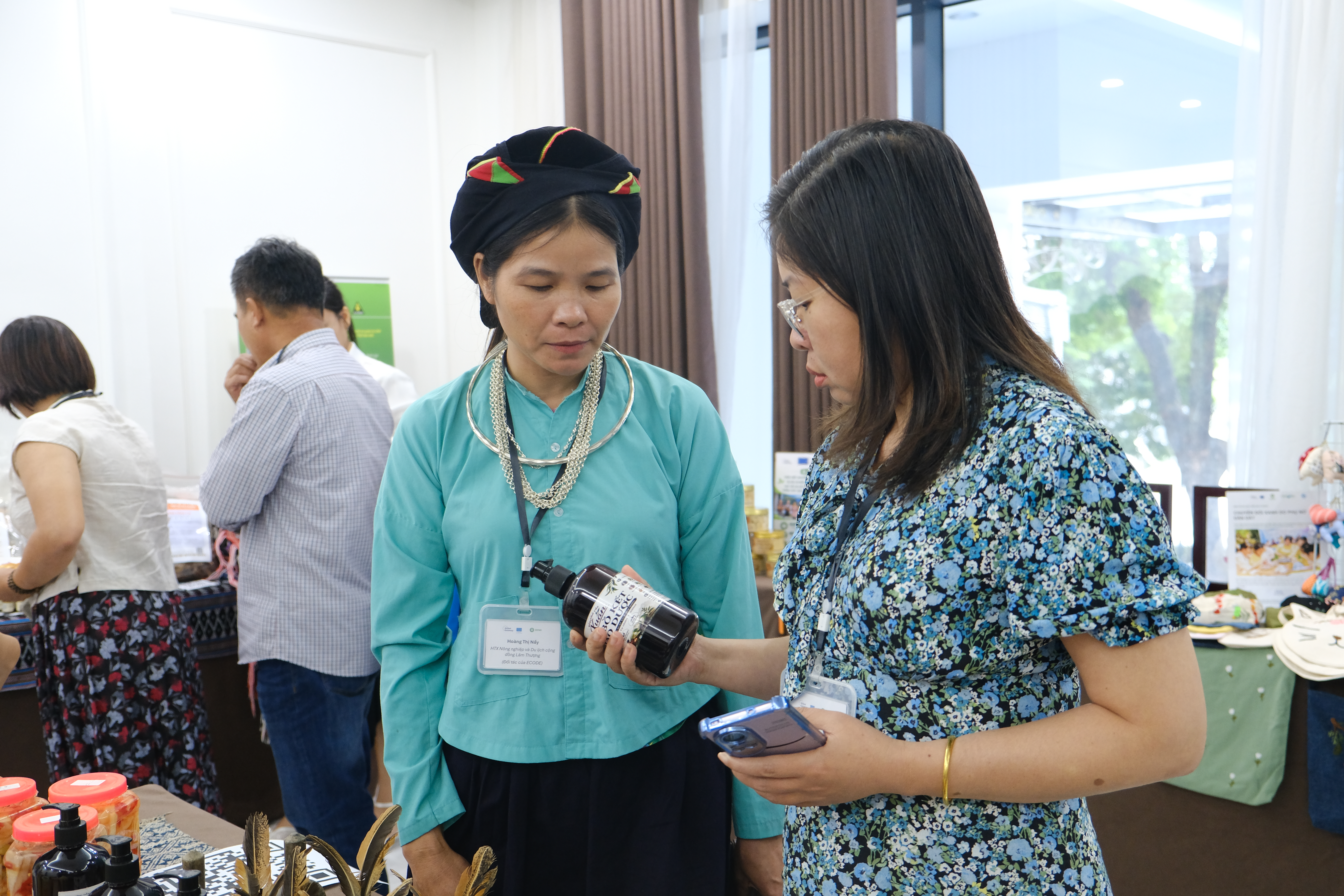
The workshop brought together grantees, local cooperatives, collaborative groups, MSMEs, and other actors to explore specific collaboration opportunities and strengthen a network for sharing practical experience on green transition and circular economy initiatives.
From better processing to higher value
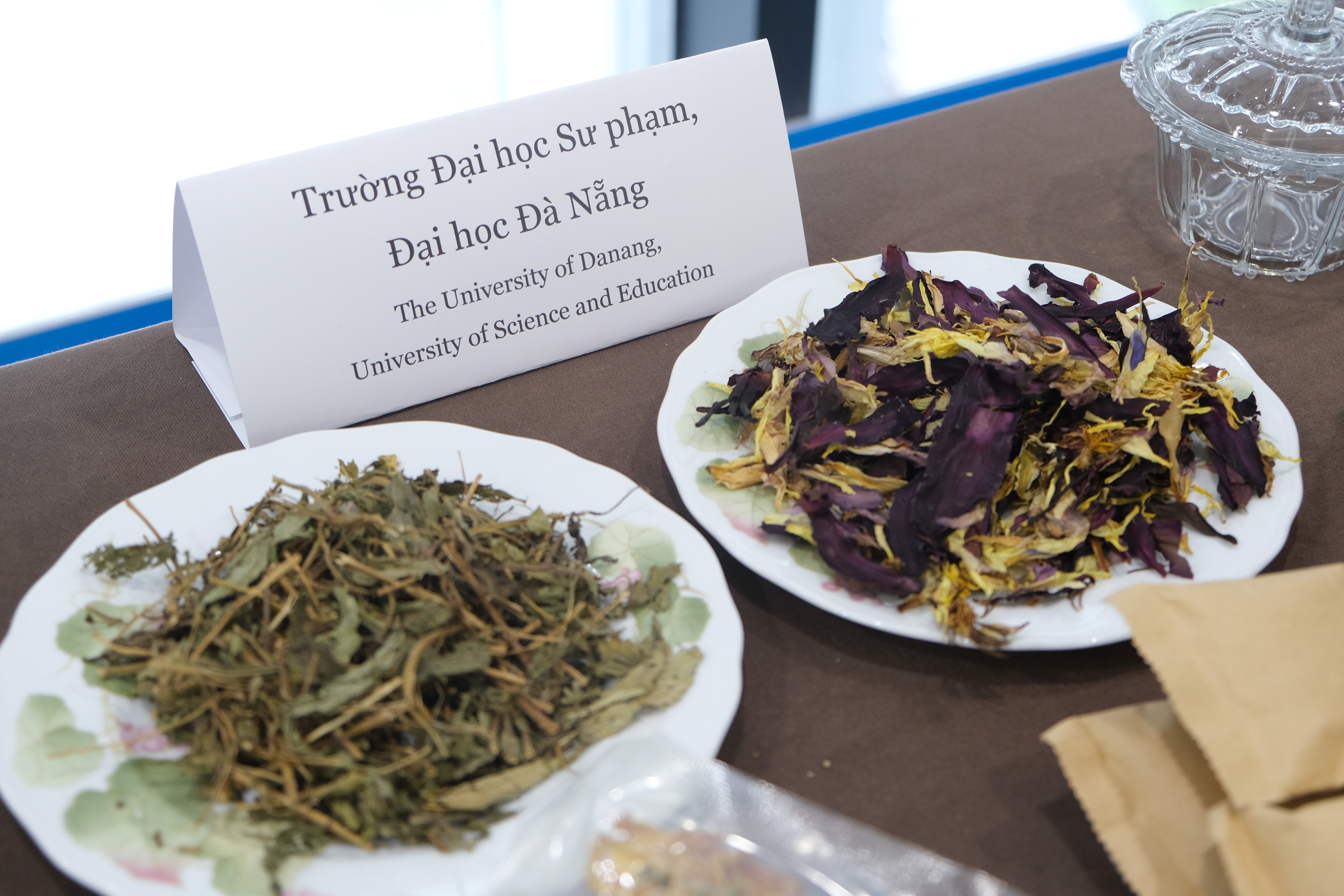
During the discussion on “Developing women-led green/OCOP product value chains,” representatives of GreenViet and Song Vang Agriculture and Medicinal Herbs Cooperative in Da Nang shared how improved processing has increased the value of che day (Ampelopsis) tea and helped expand its customer base.

Previously, local producers typically cut che day into large, coarse pieces for basic processing. With support from the project and technical experts, they improved processing and grading methods and developed different tea lines for different customer groups.
As a result, the selling price of che day tea has tripled, demonstrating how product improvements aligned with market demand can create greater value at the processing stage and improve livelihood opportunities for Co Tu women.

During the discussion on “Market linkages, e-commerce, and access to green finance for green products and livelihoods,” representatives of the Center for Highland Natural Resource Governance (CEGORN), Center of Research and Inclusive Development Actions (IDEA), and Mekong Institute of Can Tho University (MI) shared experiences in supporting women, including women with disabilities, to develop livelihoods through capacity building, market linkages and product development.
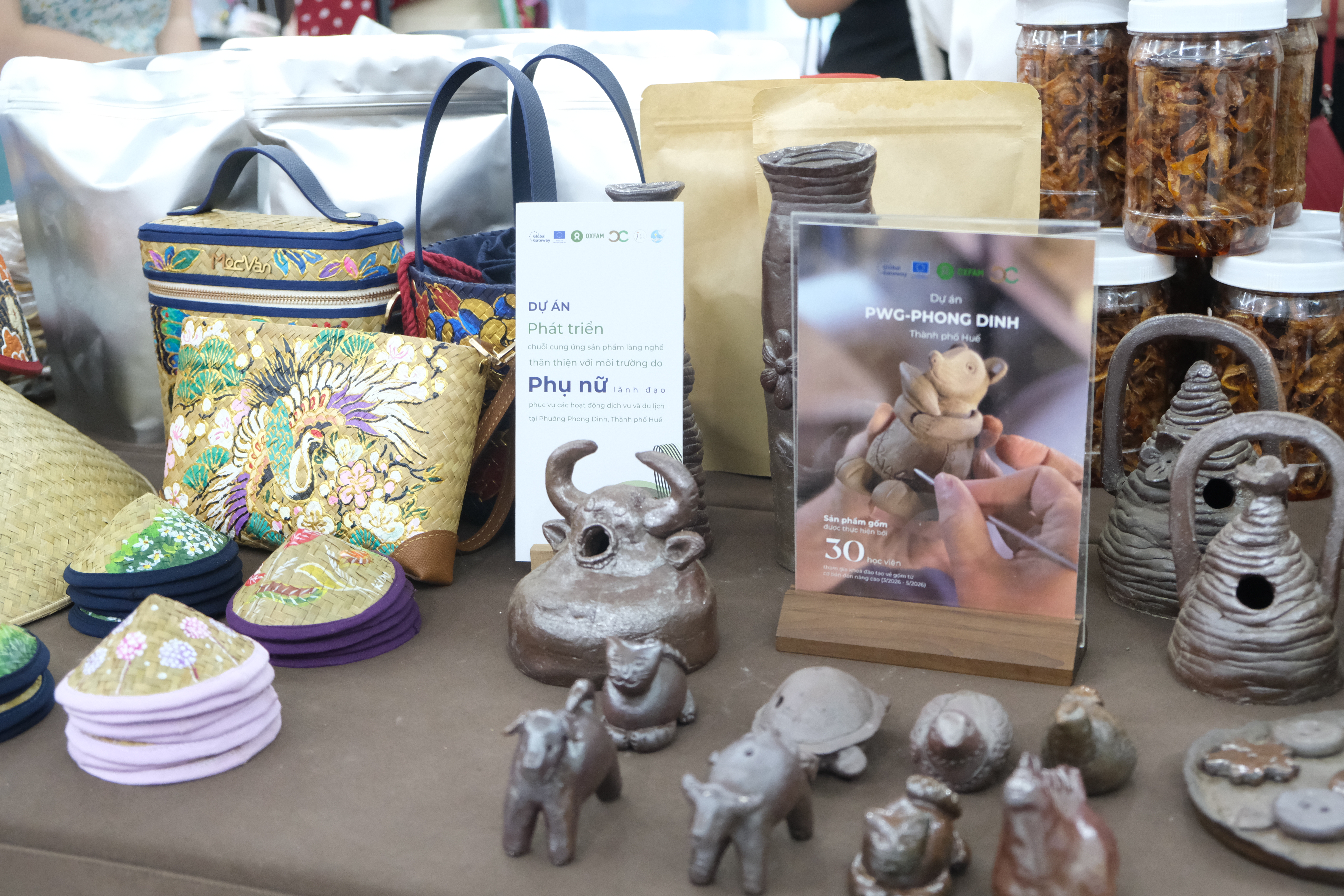
Rather than providing direct support, the organizations focus on technical guidance and connecting participants with experts, markets, and other resources. Some initiatives also turn materials such as electrical wire, fabric scraps, recycled materials and water hyacinth into handicrafts, creating economic value while reducing waste.
The discussion highlighted the importance of going digital, diversifying sales channels and building networks to help women strengthen their groups, improve products and increase income while maintaining greater self-reliance beyond the project.

Accessing green finance
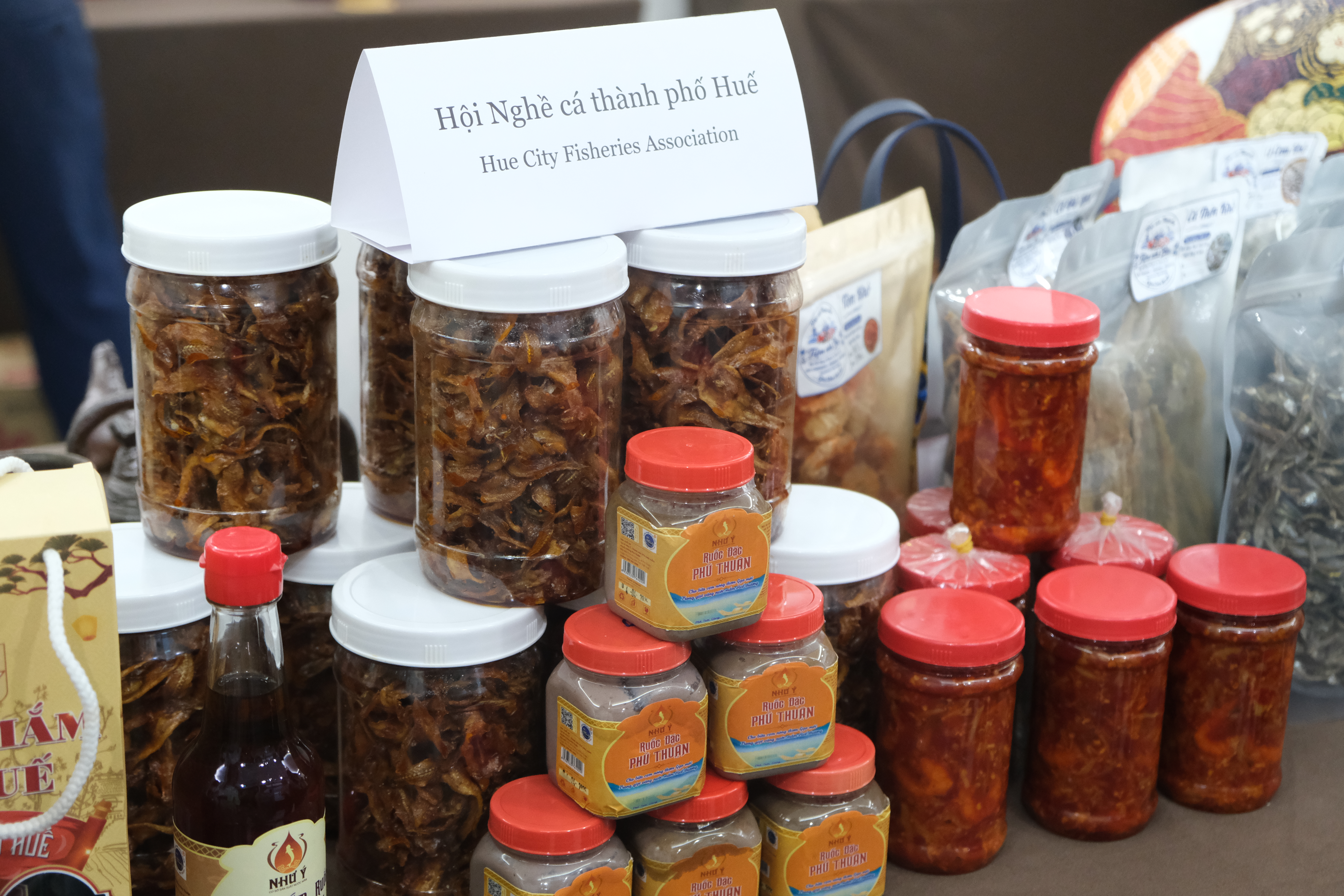
At another discussion session, a representative of the Hue Fisheries Association (HUEFIS) shared experiences in accessing green finance for fish sauce production and processing businesses, most of which are women-owned.
The businesses have received training and been connected with the Vietnam Bank for Social Policies, Agribank, the Farmers’ Union, and programs supporting women’s entrepreneurship, including the industrial promotion program.
However, access to green credit remains challenging because businesses must demonstrate that their activities and products meet green criteria. This can be particularly difficult for processing businesses that do not yet have the required certifications.
One approach discussed was to combine different sources of finance and invest in the green transition step by step, while making use of support from the OCOP program and other relevant programs.
Participants also met with experts on market access, online sales and e-commerce, who provided advice on specific challenges faced by the initiatives.
The Project on Supporting Women-led Green Initiatives (PWG) (2025–2029) is a component of the Women-led Green Partnership Program, funded by the European Union and implemented by Oxfam in Vietnam.
The project aims to strengthen the participation of women from diverse groups in the green and circular economy and to improve their access to sustainable employment and business opportunities. The first funding round of PWG is supporting 18 grantees in implementing their initiatives.