
Investing in workers is investing in business competitiveness

On October 15 in Can Tho, Oxfam in Vietnam and the Vietnam Chamber of Commerce and Industry, Ho Chi Minh City Branch (VCCI – HCM), co-organized the closing workshop for the project “Improving access to international markets for shrimp and rice enterprises through enhanced skills and occupational safety and health at the enterprise level”.

Social Responsibility Is Becoming a Requirement
Tran Ngoc Liem, Deputy Secretary General of VCCI and Director of the VCCI-HCM, said that shrimp and rice are two key agricultural sectors that contribute significantly to food security, exports, and socioeconomic development, especially in the Mekong Delta. He noted that supply chain due diligence regulations are turning social responsibility from an encouraged option into a “mandatory ticket” for Vietnamese agricultural products to enter international markets.
Major markets such as the European Union, the United States, and Japan care about more than quality and price. They also set strict standards for occupational safety and health, environmental protection, and transparent governance under Environmental, Social, and Governance (ESG) criteria. Meanwhile, most domestic rice and seafood processors are small and medium-sized enterprises with limited resources and management capacity that have not caught up with international standards. Many focus only on controlling raw material areas and products, while paying less attention to workers’ conditions. Labor shortages add to the pressure to retain employees.

Tran Ngoc Liem, Deputy Secretary General of VCCI and Director of the VCCI-HCM
In this context, the Social Protection Project* has worked alongside enterprises in the shrimp and rice value chains in the Mekong Delta to improve access to social protection and OHS for workers, especially women.
Vu Thi Quynh Hoa, Country Director of Oxfam in Vietnam, emphasized: “Promoting decent work, strengthening occupational health and safety, and practicing responsible business not only benefit workers, but also contribute to the long-term competitiveness of businesses, industries, and Vietnam as a whole.”

Vu Thi Quynh Hoa, Country Director of Oxfam in Vietnam
Four Years of Impact (2022 - 2026)
In Ho Chi Minh City, Can Tho, An Giang, and Ca Mau, the Project achieved the following:
- More than 100 shrimp and rice enterprises in improving occupational safety and health and practicing responsible business.
- More than 23,000 workers (over 55% women) benefiting from project activities — nearly 4,000 of them through direct training.
- 10 champion enterprise models.
- 4 enterprises piloted ESG-based sustainability management — all four completed an independent ESG assessment with positive results.
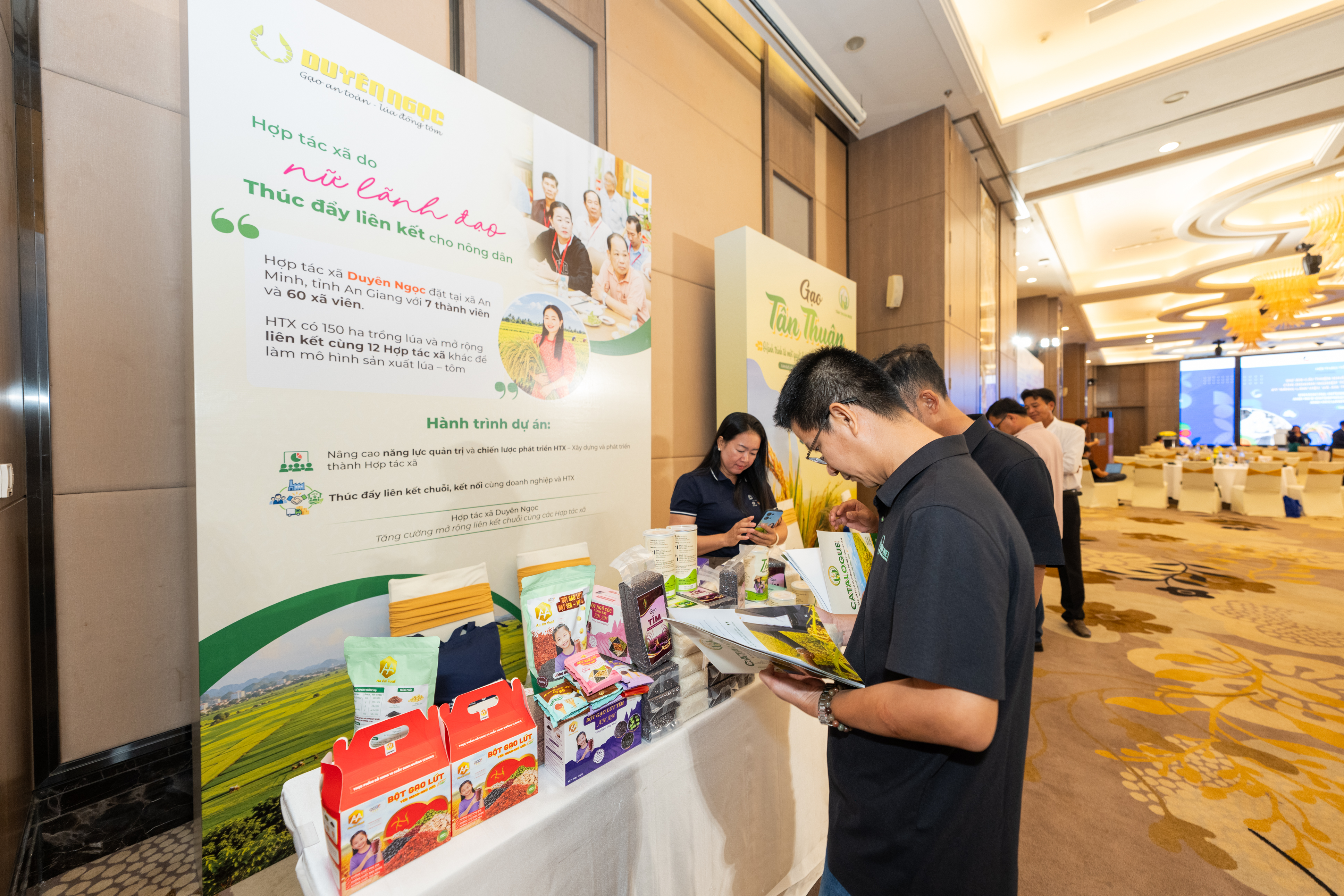
- More than 30 shrimp and rice cooperatives gained market links, stronger branding and food-safety certification, with members trained in occupational safety — building more stable livelihoods, the foundation for access to social protection.
- Multi-stakeholder cooperation initiatives established to advance responsible business practices and spread good practices across the shrimp and rice value chains.

Nguyen Le Nhat Thanh, Deputy Head of the Employers and Women Entrepreneurs Office at VCCI-HCM
Nguyen Le Nhat Thanh, Deputy Head of the Employers and Women Entrepreneurs Office at VCCI-HCM, said: “Protecting health, ensuring workplace safety, and developing skills for workers is protecting an enterprise’s core assets and production capacity. When a large enterprise improves its working environment, the positive impact spreads to thousands of families and surrounding communities.”
More than 130 participants attended the event, including representatives from the Department of Employment (Ministry of Home Affairs), the Institute of Policy and Strategy (Ministry of Agriculture and Environment), the Central Committee of the Vietnam Farmers’ Union, local departments and agencies, enterprises, cooperatives, and the media.

A Sustainable future for the shrimp and rice sectors
To maintain a competitive edge over the next 10 to 20 years, enterprises need to meet increasingly demanding requirements on the environment, traceability, and social responsibility. They should also invest in workers, management capacity, and adaptability. At the panel “A Sustainable Future for Vietnam’s Shrimp and Rice Sectors,” moderated by Pham Thuy Dung, Project Manager, representatives from government agencies, business support organizations, shrimp and rice enterprises, and enterprise trade unions shared their perspectives:
Nguyen Khanh Long, Deputy Director General of the Department of Employment, Ministry of Home Affairs discussed the shift in how enterprises and workers view occupational safety and health (OSH), from compliance with regulations to building a safety culture, proactively managing risks, and increasing worker participation. He also covered OSH policy directions and new risks in the era of AI and advancing technology.
Bui Thi Ninh, Deputy Director of VCCI-HCM focused on the difficulties enterprises face as international requirements and standards keep changing. In her view, beyond support from partner organizations, enterprises need to proactively improve, invest, and build their capacity to adapt to new market demands.
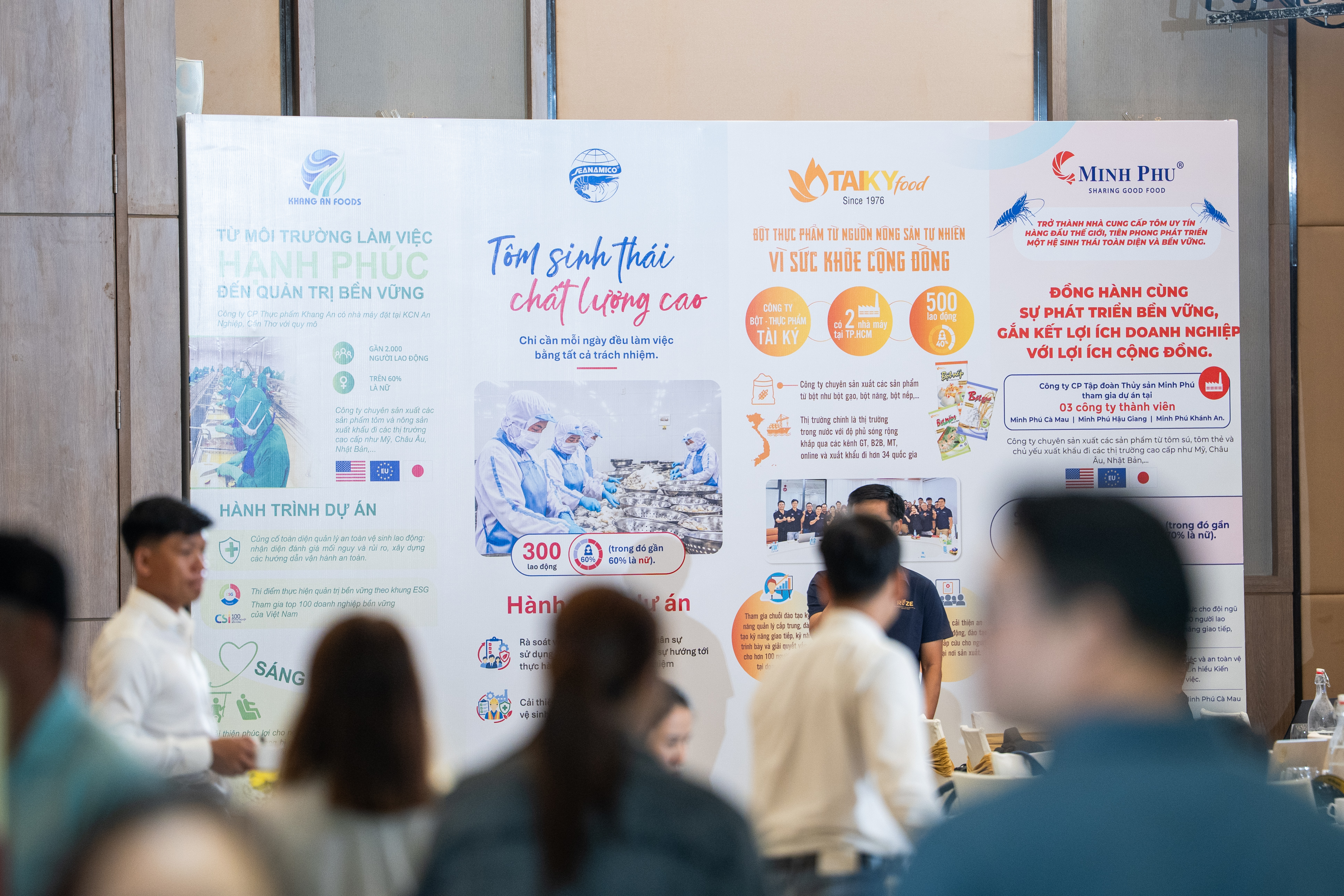
Drawing on the experience of a shrimp exporter, Phan Van Tam, Deputy General Manager of Minh Phu Seafood Corporation, shared that requirements for food safety, traceability, social security, and OSH are increasingly a prerequisite for reaching demanding markets. He also shared that more than 3,000 Minh Phu managers and workers took part in the program’s training and spoke about the role of core staff as production expands.
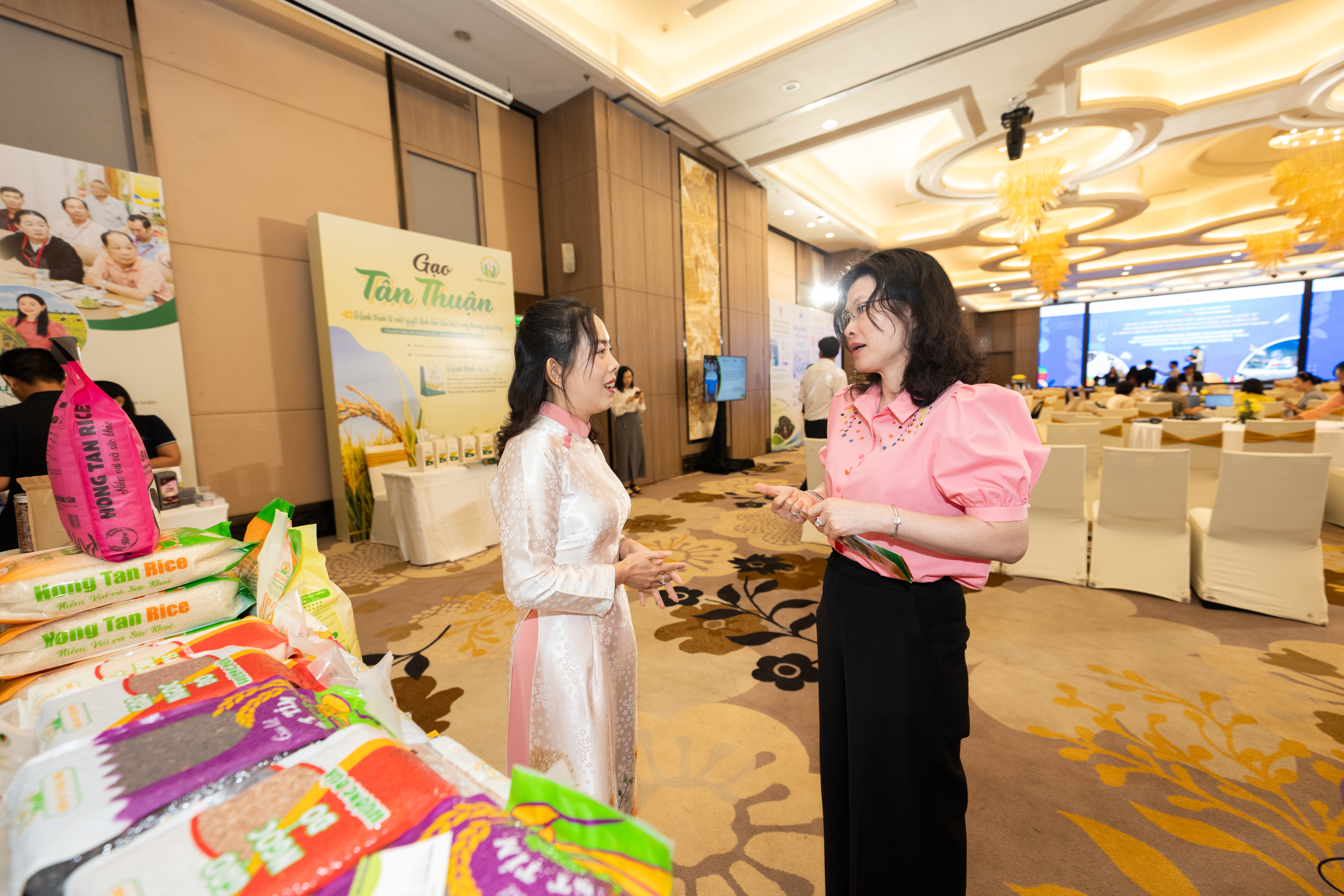
Luu Thi Yen Hang, Director of Hong Tan Rice Co., Ltd. described the challenges small and medium-sized enterprises face in meeting international customers’ requirements, from certifications and export licenses to maintaining a stable supply. She also explained how the company partners with farmers and develops organic rice, colored rice, and rice by-products to add value and reduce risk.
- Vo Thi Hong Diem, Vice Chair of the Trade Union at Khang An Foods Joint Stock Company shared how the company has improved its policies and working environment, from meal quality and rest time to recover spaces and sports activities for workers. As competition for labor grows, taking better care of workers is also a way for enterprises to retain and develop their workforce.

Pham Thuy Dung, Project Manager, moderator of the panel “A Sustainable Future for Vietnam’s Shrimp and Rice Sectors”

The panel “A Sustainable Future for Vietnam’s Shrimp and Rice Sectors"
Sustainable development begins with market standards, and it also depends on an enterprise’s capacity and its workers’ conditions. Investing in skills, occupational safety and health, sustainable governance, and value chain linkages will help enterprises respond more proactively to market changes. It will also lay the foundation for Vietnam’s shrimp and rice sectors to keep reaching the world.
*The Social Protection Project is funded by the Belgian Directorate-General for Development Cooperation (2022–2026) and implemented by Oxfam in Vietnam in collaboration with the Farmers’ Union and the Vietnam Chamber of Commerce and Industry – Ho Chi Minh City Branch (VCCI-HCM) in the Mekong Delta. The project comprises two components:
- “Promoting access to social protection and improved working conditions for women farmers and seasonal agricultural workers in the shrimp and rice value chains in Vietnam,”
- (ii) “Improving access to international markets for shrimp and rice enterprises through enhanced skills and occupational safety and health at the enterprise level.”