
Canada-funded GORICE project launches: Towards high-quality, low-emission, sustainable and inclusive rice value chains in the Mekong Delta

CAN THO, 28 October 2026 - Oxfam in Vietnam and its partners today launched GORICE, a Canada-funded project to help rice producers in the Mekong Delta cut emissions, adapt to climate change and earn a fairer share in the rice value chain. Running until 2030, the project aims to reduce emissions by around 748,000 tons of CO₂ equivalent and directly benefit 48,200 people in Can Tho City, An Giang Province and Vinh Long Province.

GORICE –Enhancing Sustainable and Climate-Resilient Low-Emission Rice Value Chains Project, is funded by the Global Affairs Canada and implemented by Oxfam, in partnership with the Vietnam Chamber of Commerce and Industry (VCCI), the Institute for Agricultural Environment (IAE) and the provincial Departments of Agriculture and Environment in Can Tho city and provinces of An Giang and Vinh Long
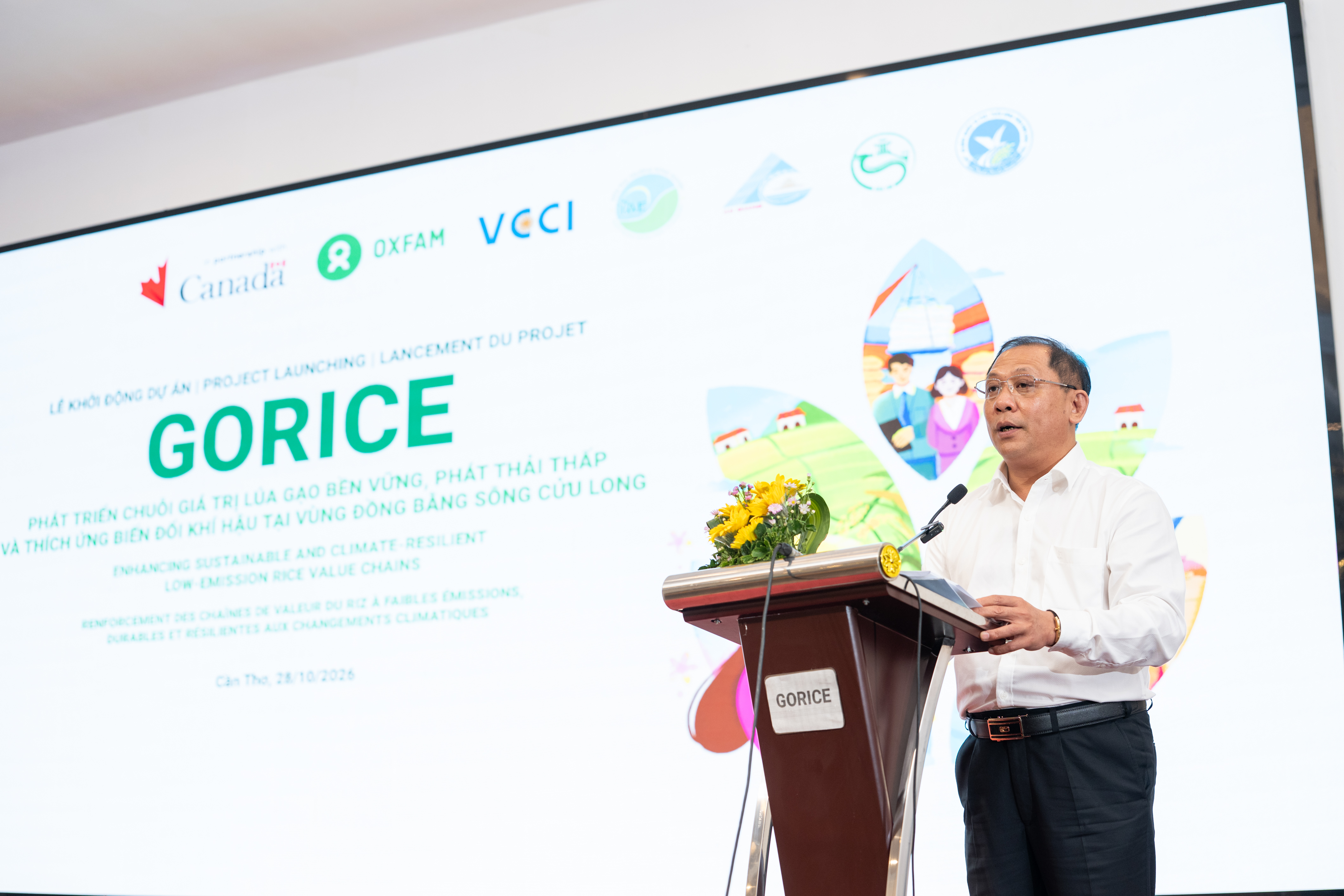
"Canada is collaborating with partners to support Vietnam’s One Million Hectares of High-Quality, Low-Emission Rice Program through the GORICE project. This initiative provides significant opportunities to bring together Canadian expertise to strengthen the growing Canada-Vietnam partnership and our shared commitment to advance sustainable agricultural growth. By combining Canadian expertise in climate-smart agriculture, carbon accounting, MRV systems, climate finance, and agri-tech innovation with Vietnamese leadership and local knowledge, GORICE will help accelerate the transition to a competitive, low-emission rice sector. The project also aims to catalyze private-sector investment and climate finance, creating lasting opportunities for farmers, particularly women, while advancing climate action and sustainable development across the Mekong Delta."– said His Excellency Jim Nickel, Ambassador of Canada to Vietnam.

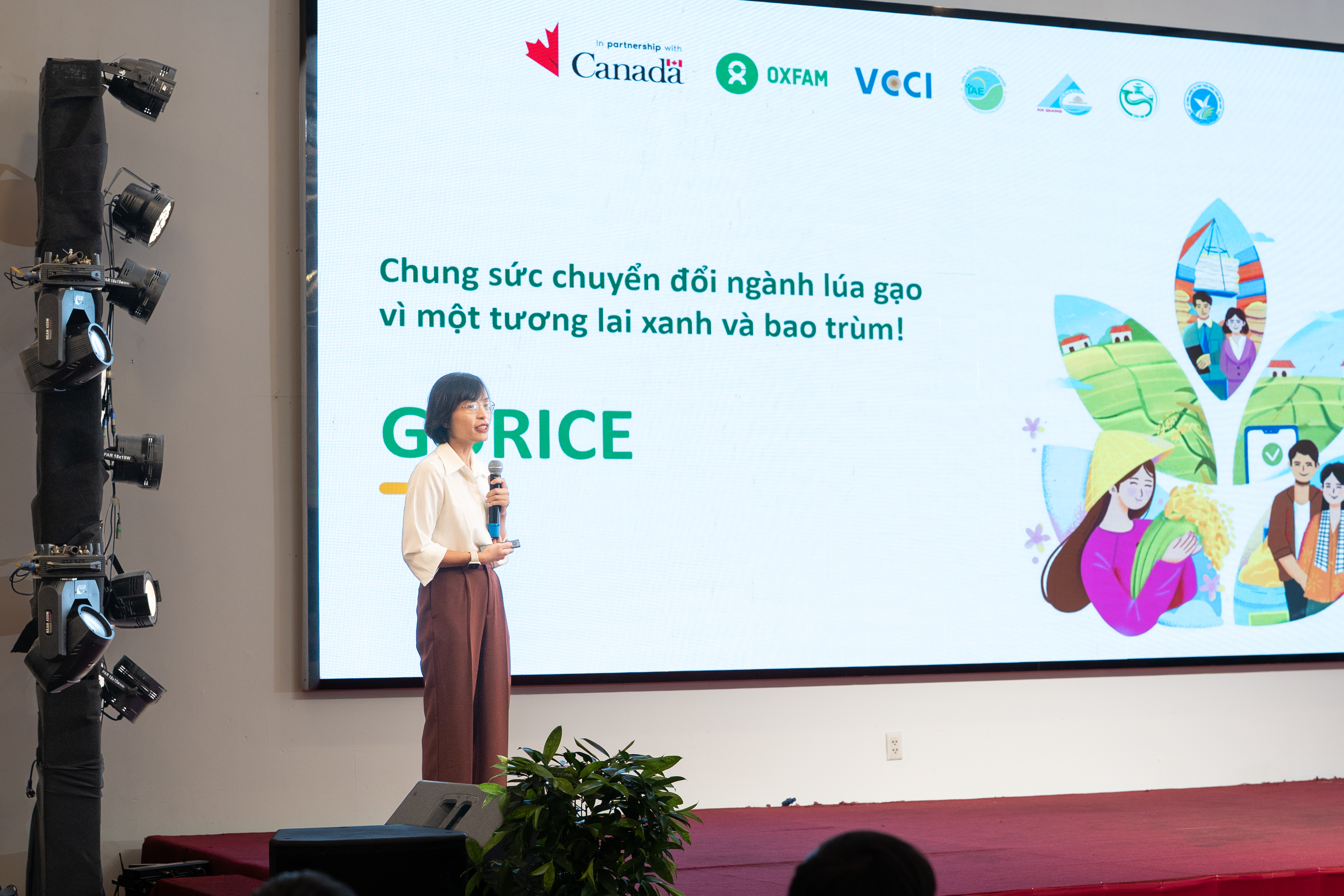
Francesca Bellone, Head of Cooperation at the Embassy of Canada spoke at the event
Rice sector in transition for a green and inclusive future
Vietnam is one of the world’s largest rice exporters, and the Mekong Delta grows about half of the country’s rice and more than 90% of its rice exports. But rice production is also the largest source of greenhouse gas emissions in Vietnamese agriculture and increasingly affected by climate change.
Recent initiatives, in particular the “One Million Hectares of High-Quality, Low-Emission Rice” Program, have shown that sustainable rice cultivation can reduce both emissions and production costs while increasing farmers’ incomes. However, the market for low-emission rice is still at an early stage, and most smallholder farmers have limited access to technical know-how, finance and market opportunities.
Realizing the green transition of the rice sector requires solutions that enable farmers, cooperatives, and enterprises to jointly build high-quality, low-emission and climate-smart rice value chains. At the same time, women, ethnic minorities and vulnerable groups need greater opportunities to participate equally in, and benefit fairly from, this transition, ensuring sustainable and inclusive development for the Mekong Delta.

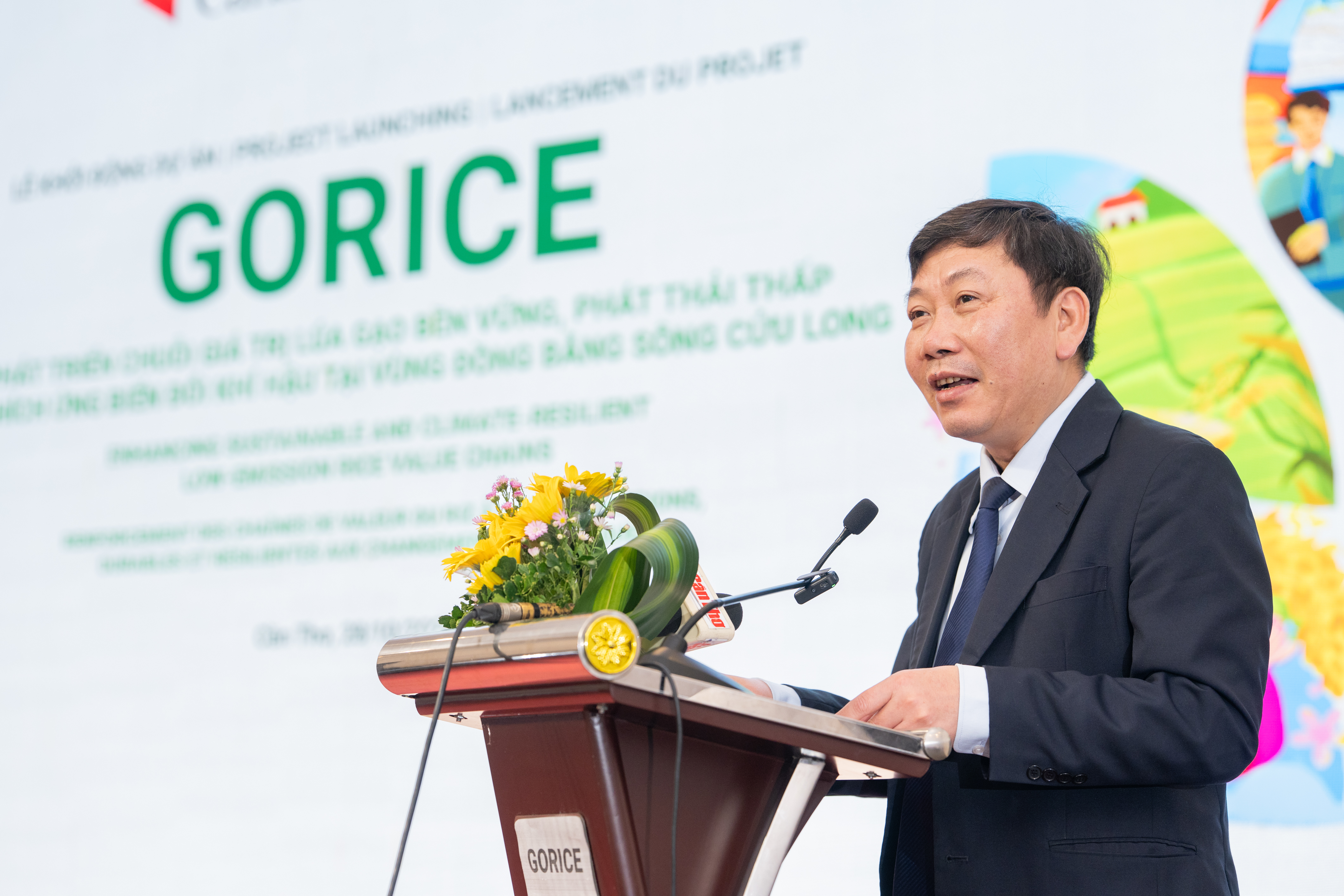
Ms. Nguyen Thi Thu Huong, Deputy Director, Department of Crop Production and Plant Protection, Ministry of Agriculture and Environment, the lead technical agency for the One Million Hectares Programme: “The ‘Sustainable Development of One Million Hectares of High-Quality and Low-Emission Rice Cultivation Associated with Green Growth in the Mekong Delta by 2030’ Program aims not only to expand sustainable cultivation across the region, but also to improve the quality, value and reputation of Vietnamese rice. Its performance is measured by farmers' incomes, verifiable emission reductions, and the competitiveness of the rice sector. GORICE will contribute practically to the Program. Its technical support packages will help farmers fully adopt low-emission rice cultivation practices, strengthen the production organization capacity of farmers and cooperatives, and reinforce linkages between cooperatives and enterprises.”

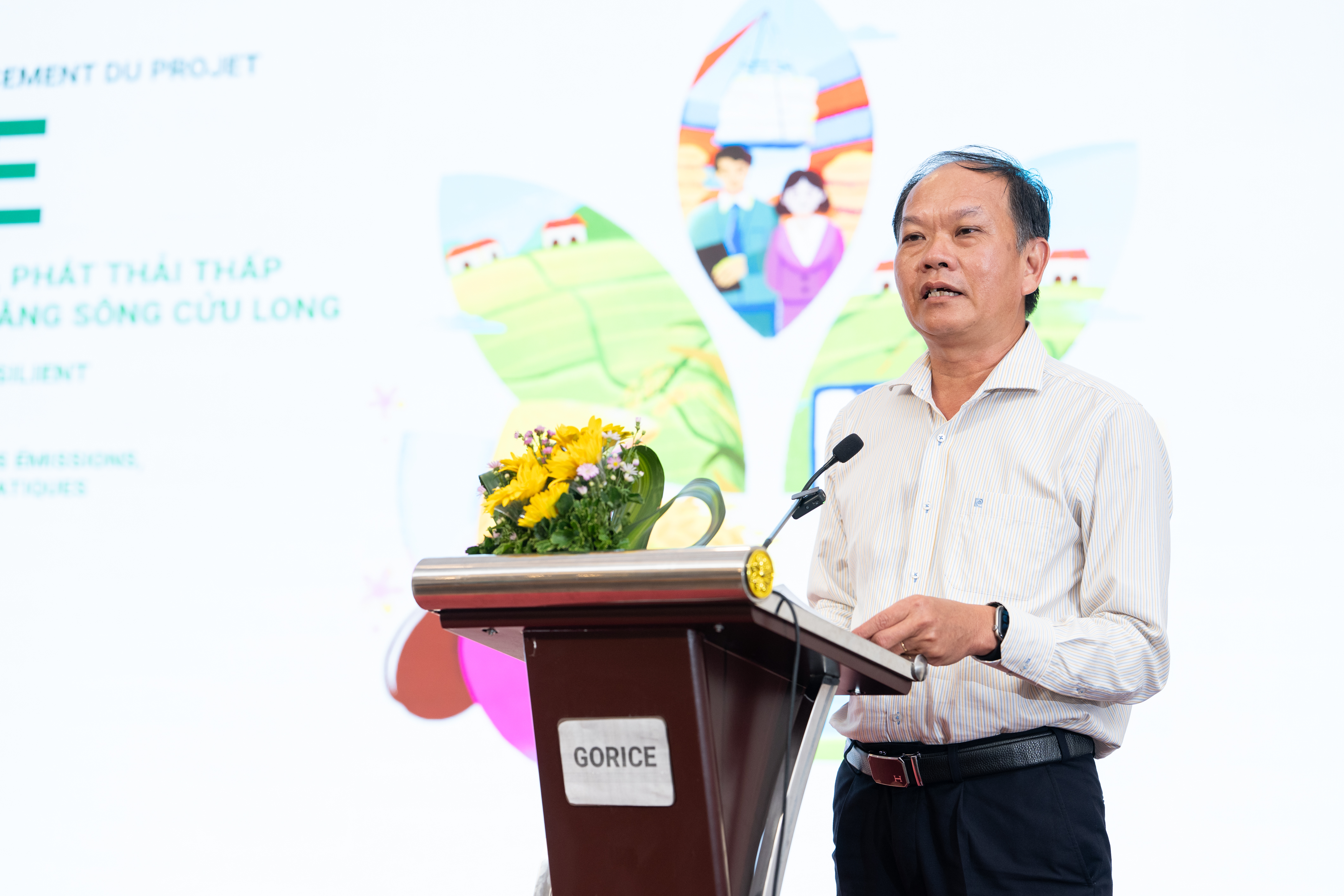
Mr. Pham Quang Tu, Deputy Country Director, Oxfam in Vietnam: “Inclusive development that ensures equity, social welfare and sustainable livelihoods for small-scale producers is a guiding principle of the GORICE project. We ensure that women, youth, ethnic minorities and vulnerable groups are empowered so that they benefit fairly from the green transition. GORICE will work with partners and communities to co-create technical and technology solutions, strengthen capacity, and promote value chain linkages and multi-stakeholder cooperation towards shared goals in high-quality, low-emission rice production.”

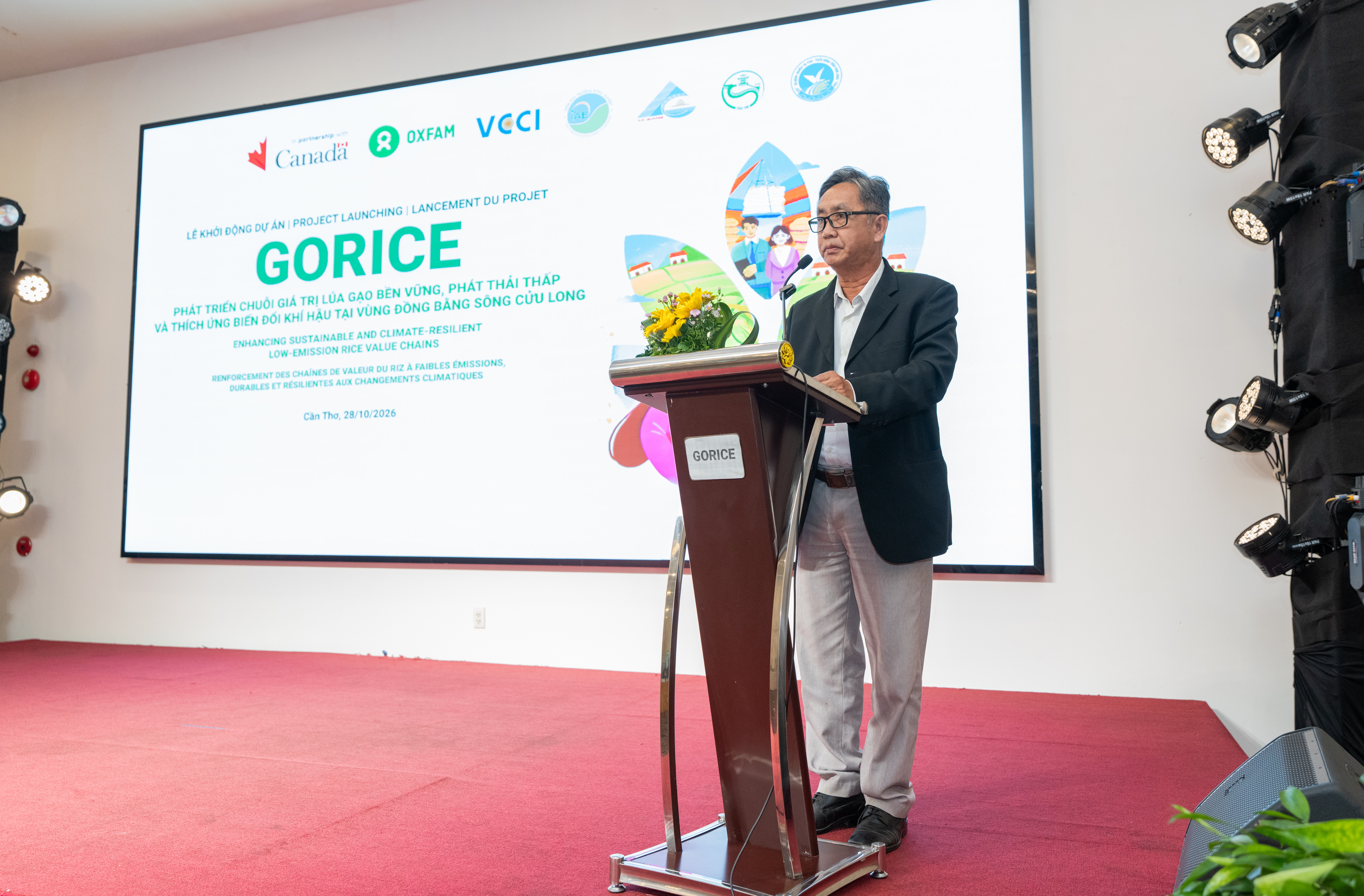
Mr. Hoang Quang Phong, Vice President, Vietnam Chamber of Commerce and Industry (VCCI): “Enterprises are the link in the chain that can at the same time provide upfront capital, transfer production practices, control quality and guarantee offtake. To engage over the long term, enterprises need sourcing areas with reliable data, long-term contracts instead of season-by-season purchasing, working capital, and risk-sharing mechanisms for price fluctuations. Through GORICE, we will support linkages between enterprises and cooperatives, help cooperatives and producers access green finance, and work with stakeholders to develop domestic demand for low-emission rice and expand markets for high-quality, low-emission rice.”

Associate Professor Ph.D. Mai Van Trinh, Director, Institute for Agricultural Environment (IAE): “When low-emission rice production is linked to green growth, green finance and international standards, measuring, reporting and verifying emission reductions has significant practical value. It adds value to products and helps mobilize long-term support. GORICE will support the development of a more participatory, consistent and reliable D-MRV system and train officials in MRV, thereby providing additional resources for the ‘One million hectares of high-quality, low-emission rice’ Program.”

The panel discussion, “Realising the One Million Hectares Project for High-Quality, Low-Emission Rice Production in the Mekong Delta: Challenges, Support Needs and Partnerships Required,” was moderated by Nguyen Hung Cuong, Private Sector Engagement Specialist at Oxfam in Vietnam, with the participation of:
Mr. Nguyen Trung Thuc, General Director, Institute of Technology and Innovation for Business, Vietnam Chamber of Commerce and Industry (VCCI)
Ms. Nguyen Thi Giang, Deputy Director, Can Tho Department of Agriculture and Environment
Assoc. Prof. Dr. Mai Van Trinh, Director, Institute of Agricultural Environment, Vietnam Academy of Agricultural Sciences, Ministry of Agriculture and Environment
Dr. Nguyen Thi Thu Huong, Deputy Director General, Department of Crop Production and Plant Protection, Ministry of Agriculture and Environment
- Mr. Luong Dinh Lan, Senior Manager, Sustainable Livelihoods and Climate Change Adaptation Program, Oxfam in Vietnam

The GORICE project aims to improve the economic, social and environmental well-being of rice farmers, especially women and ethnic minorities, through inclusive, gender-responsive, and climate-smart rice production practices in the Mekong Delta of Vietnam. The project focuses on three areas:
- Strengthen sustainable, low-emission, climate-resilient, and gender-equal rice production, and participate effectively in equitable carbon projects.
- Strengthen the capacity and participation of women and ethnic minorities in sustainable, low-emission, climate-resilient rice production.
- Strengthen partnerships to create an enabling environment for sustainable, low-emission, climate-resilient, and gender-equal rice production.
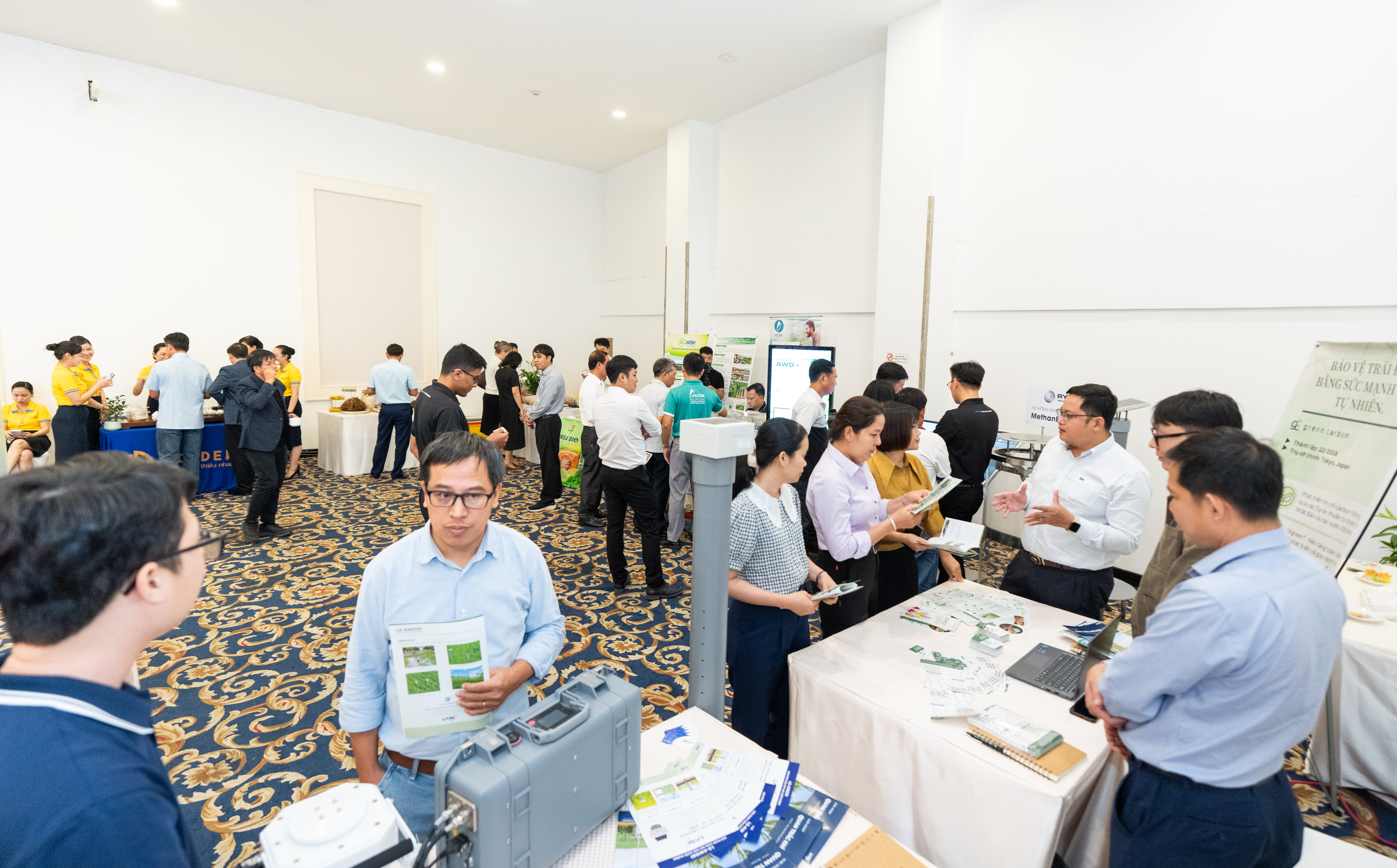
Key activities include training farmers in low-emission farming techniques; promoting the circular economy; growing the market for low-emission rice, including among Vietnamese consumers; building a participatory greenhouse gas monitoring, reporting and verification (MRV) framework and contributing to the development of carbon markets; empowering women, youth and ethnic minorities; expanding access to green technology and green finance; and conducting research and sharing good practices.
By 2030, GORICE aims for: 48,200 direct beneficiaries (50% women); emission reductions of approximately 748,000 tons of carbon equivalent; 180,000 hectares of sown area applying high-quality, low-emission farming practices; and 100,000 consumers benefiting.